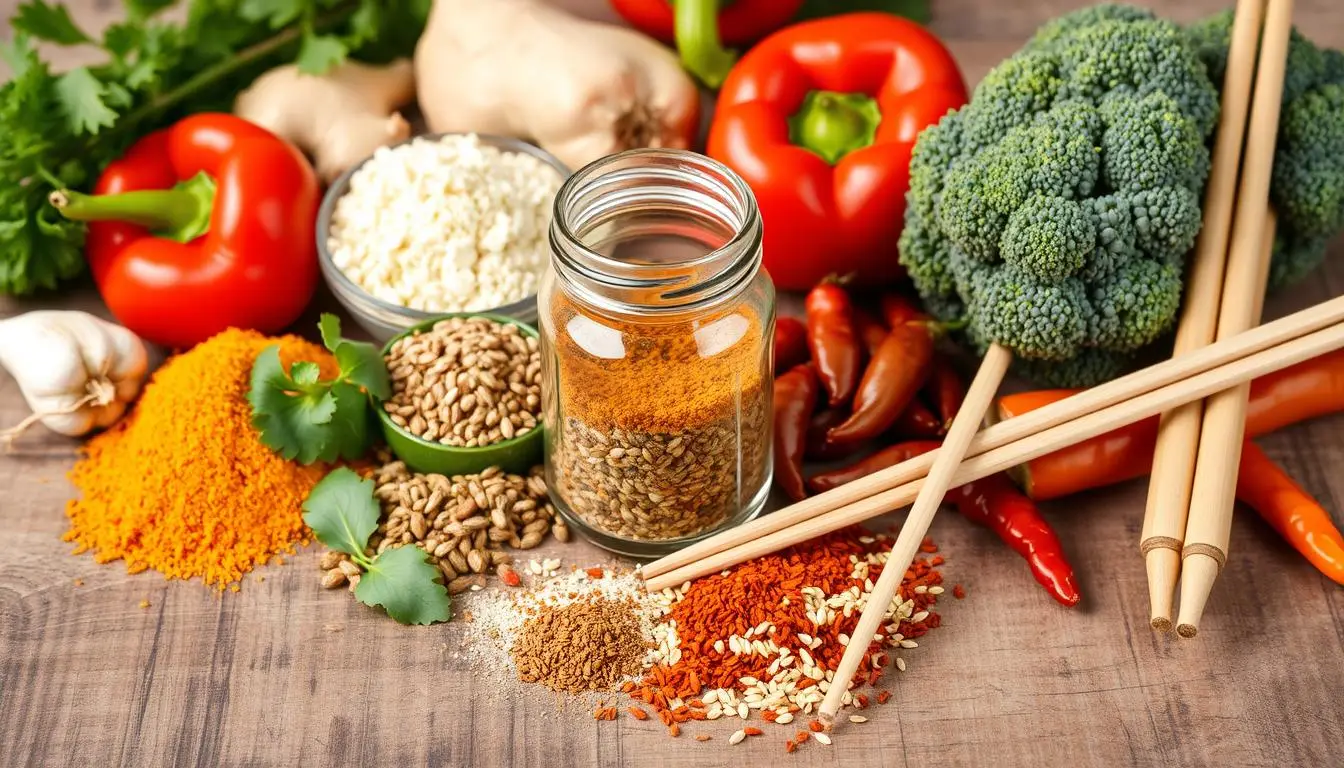
Homemade stir fry seasoning is a dry blend of garlic, ginger, onion, pepper, and optional five-spice powder. Keeping the dry mix separate from soy sauce and other liquids makes it easy to store, measure, and adapt to different stir-fries.
This recipe makes about 6 tablespoons. Start with 1 tablespoon of seasoning for a stir-fry containing roughly 1 pound (450 g) of protein and vegetables, then adjust after tasting the cooked sauce.
Homemade Stir Fry Seasoning Base
The base blend is intentionally unsalted. Sodium can then be controlled through the soy sauce or tamari used in the finished dish.
- 2 tablespoons garlic powder
- 2 tablespoons ground ginger
- 1 tablespoon onion powder
- 2 teaspoons ground black or white pepper
- 1 teaspoon Chinese five-spice powder, optional
- 1 teaspoon crushed red pepper flakes, optional
Yield: About 6 tablespoons. Five-spice powder adds a distinct anise-and-cinnamon note, so omit it when a more neutral garlic-ginger blend is preferred.
How to Mix and Store the Dry Blend
- Measure all dry ingredients into a clean, completely dry bowl.
- Whisk until the color and texture look even and no clumps remain.
- Transfer the blend to a clean airtight jar and label it with the mixing date.
- Store in a cool, dry cupboard away from heat, sunlight, and steam. For the strongest flavor, use within 3 months.
Always use a dry measuring spoon. Moisture introduced into the jar can cause clumping and shorten the blend’s useful life. Discard it if there is mold, an unusual odor, or evidence of moisture or pests.
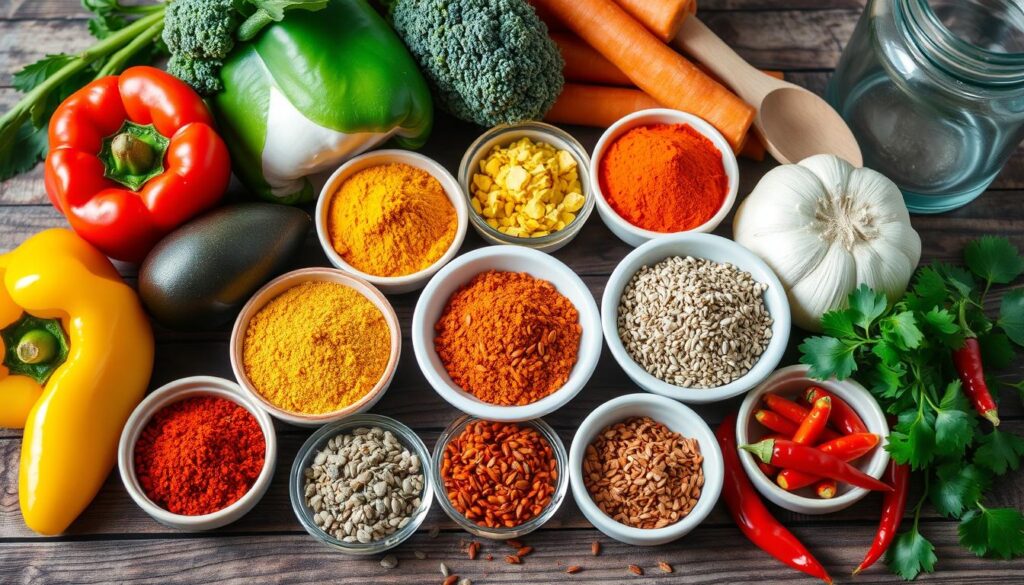
How to Turn It Into Stir Fry Sauce
For one family-size stir-fry, whisk the following ingredients together before heating the wok:
- 1 tablespoon homemade stir fry seasoning
- 3 tablespoons reduced-sodium soy sauce or tamari
- 1/3 cup water or unsalted stock
- 2 teaspoons cornstarch
- 1 teaspoon toasted sesame oil, optional
- 1 teaspoon rice vinegar or lime juice, optional
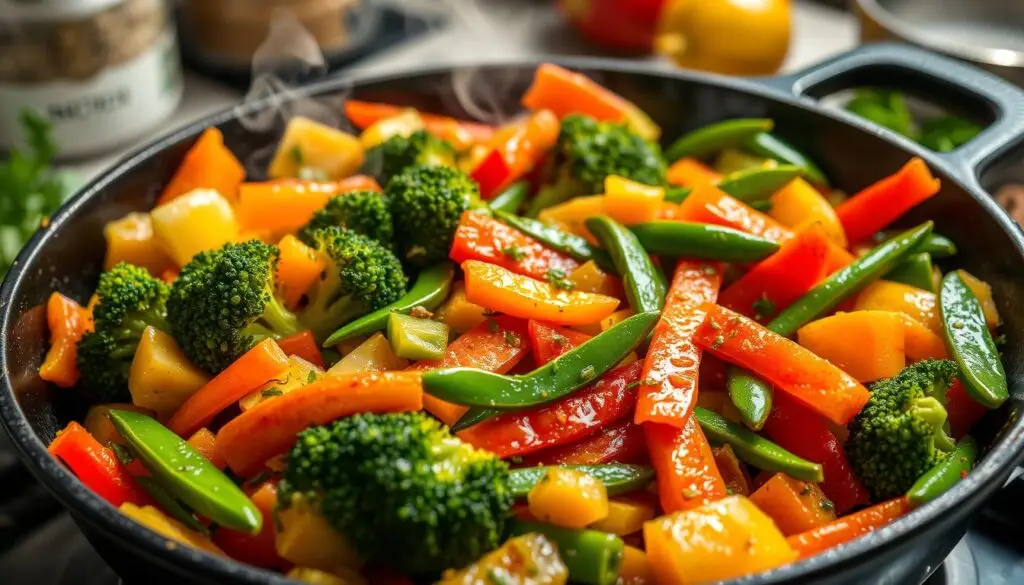
- Cook the protein and vegetables in batches so the pan stays hot and the ingredients brown rather than steam.
- Return everything to the pan and stir the sauce again because the cornstarch settles quickly.
- Pour in the sauce and toss until it bubbles, thickens, and coats the ingredients evenly.
- Taste only after the sauce has cooked, then add more seasoning, acidity, or soy sauce if needed.
Allergen note: Soy sauce commonly contains soy and wheat; tamari may still contain soy, and sesame oil contains sesame. Check every package when cooking for someone with an allergy. The FDA identifies soy, wheat, and sesame among the major food allergens.
Three Easy Seasoning Variations
1. Sichuan-Inspired
Add 1 teaspoon finely ground Sichuan peppercorn and an extra 1/2 teaspoon red pepper flakes to the base blend. This creates a citrusy, gently numbing heat. It is labeled “Sichuan-inspired” rather than presented as a complete traditional seasoning.
2. Korean-Inspired
Add 2 teaspoons gochugaru and 1 teaspoon toasted sesame seeds to the base. Use the sesame-free base when serving anyone with a sesame allergy. Gochujang is a wet fermented paste, so add it to the sauce rather than the dry storage jar.
3. Citrus-Chili
Add 1 teaspoon crushed red pepper and 1/2 teaspoon ground coriander to the dry blend. Finish the cooked stir-fry with fresh lime juice. Do not add fresh zest or juice to the dry jar because moisture reduces storage stability.
Practical Stir Fry Tips
- Cut ingredients into similar sizes so they cook at a similar rate.
- Prepare the sauce before heating the pan; stir-frying moves quickly.
- Cook dense vegetables such as carrots before faster-cooking snow peas or leafy greens.
- Use a large wok or skillet and work in batches when necessary.
- Add the sauce near the end so the cornstarch thickens without burning.
Frequently Asked Questions
Is stir fry seasoning the same as stir fry sauce?
No. The seasoning is a shelf-stable dry spice blend. A stir fry sauce combines the seasoning with liquid ingredients such as soy sauce, water, vinegar, and sesame oil.
How much seasoning should I use?
Begin with 1 tablespoon for about 1 pound (450 g) of protein and vegetables. Taste the cooked sauce before adding more because soy sauce and other ingredients also contribute salt and flavor.
Can this blend be made without five-spice powder?
Yes. Five-spice powder is optional. Omitting it produces a more neutral garlic-and-ginger blend that works with a wider range of sauces.
Is the blend gluten-free?
The dry blend can be gluten-free when every spice label is verified. For the sauce, use certified gluten-free tamari or another suitable alternative because standard soy sauce commonly contains wheat.
Editorial note: This page was substantially revised for clearer measurements, ingredient separation, allergen disclosure, and more accurate cultural labeling. Treat the formula as a flexible starting point and adjust the cooked sauce to taste.
1 thought on “Homemade Stir Fry Seasoning: Dry Mix + 3 Variations”