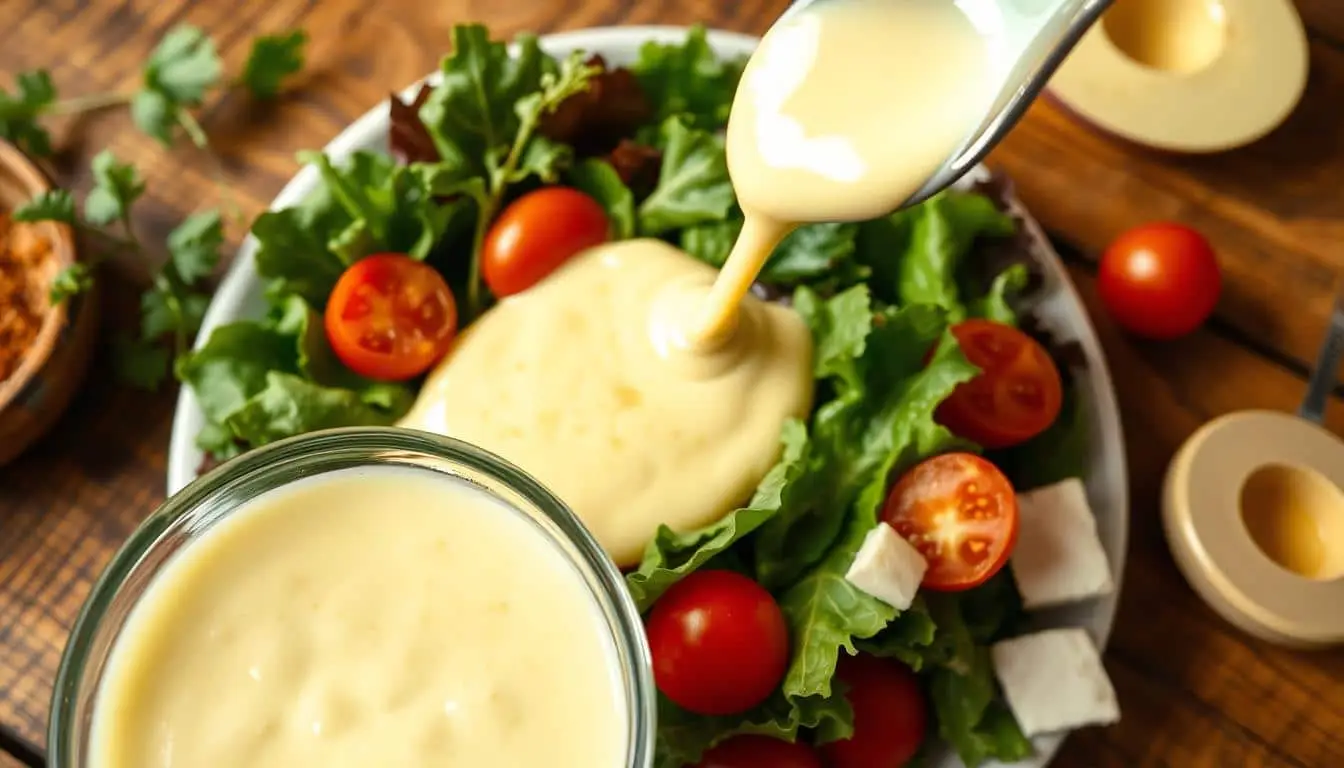
Strict carnivore eating and salad do not naturally overlap: leafy greens, vinegar, mustard, herbs, and plant oils are not animal foods. So if you are searching for a salad dressing for a carnivore diet, first decide whether you mean a strict animal-only approach or a flexible, low-carb version that still includes some plants. The recipes below keep those two approaches clearly separated.
Quick answer: what can you use as carnivore dressing?
For a strict animal-only approach, use warm sauces made from ingredients such as butter, bacon drippings, plain meat broth, eggs, or other animal fats. They work best spooned over meat, fish, or eggs rather than chilled on leafy salad. If you include greens, vinegar, or mustard, call the result a flexible or carnivore-inspired dressing rather than a strict carnivore recipe.
Strict vs. flexible ingredients
| Ingredient | Strict animal-only? | How it behaves in a dressing |
|---|---|---|
| Butter or ghee | Animal-based | Rich and smooth while warm; firms when chilled |
| Bacon drippings | Animal-based; check curing ingredients | Smoky and fluid while warm; solidifies as it cools |
| Plain meat broth | Can be; check the label | Thins warm fat and makes a spoonable sauce |
| Egg yolk | Animal-based | Adds body and can help emulsify fat |
| Vinegar | No | Adds acidity to a flexible dressing |
| Dijon mustard | No | Adds acidity, seasoning, and helps emulsification |
| Leafy greens | No | Use only if your version of the diet includes plants |
1. Warm butter and broth sauce
This is the simplest animal-based option. It is intentionally a warm finishing sauce rather than a cold vinaigrette because butter firms in the refrigerator.
Ingredients — about 2 servings
- 2 tablespoons unsalted butter
- 1/4 cup warm plain beef, chicken, or bone broth
- Salt to taste, optional
Method
- Warm the broth gently in a small pan; do not let it boil hard.
- Reduce the heat to low and whisk in the butter a little at a time.
- As soon as the sauce looks glossy and combined, remove it from the heat.
- Spoon it immediately over cooked steak, chicken, fish, or eggs.
Texture note: if the sauce sits too long, the butter can separate or begin to firm. Gentle warmth and serving it immediately are more useful than trying to store it as a bottled dressing.
2. Warm bacon pan sauce
This version uses rendered bacon fat for a stronger smoky flavor. Check the bacon label if you avoid added sugar, spices, or other plant-derived curing ingredients.
Ingredients — about 2 servings
- 2 tablespoons warm drippings from fully cooked bacon
- 1/4 cup warm plain meat broth
- 2 tablespoons finely crumbled cooked bacon
Whisk the warm drippings and broth together over low heat, remove from the heat, and stir in the bacon. Spoon over cooked meat while warm. If it cools and separates, warm it gently and whisk again.
3. Egg-and-butter emulsion
If you want a creamier animal-based sauce, egg yolk can provide the body that vinegar and mustard normally help provide in a conventional dressing. Because this version is served without fully cooking the egg, use pasteurized egg yolk or a pasteurized egg product. The FDA recommends pasteurized eggs or egg products for recipes served with raw or undercooked egg.
- 1 pasteurized egg yolk
- 3 tablespoons melted unsalted butter, warm rather than hot
- 1–2 teaspoons warm plain broth, as needed
- Salt to taste, optional
Whisk the pasteurized yolk until smooth. Add the warm butter very slowly while whisking continuously. If the mixture becomes too thick, whisk in a teaspoon of warm broth. Serve promptly. For a more conventional butter-based emulsion, see our butter mayonnaise recipe.
Read the FDA egg-safety guidance before preparing uncooked egg-based sauces, particularly for children, older adults, pregnant people, or anyone with a weakened immune system.
Flexible warm salad dressing if you include plants
If your version of carnivore eating includes a small amount of plant food, this warm dressing works on leafy greens—but it is not strict carnivore.
- 2 tablespoons warm bacon drippings or melted butter
- 1 tablespoon vinegar
- 1 teaspoon Dijon mustard, optional
- Salt to taste
Whisk everything together immediately before serving and toss lightly with the greens while the fat is still fluid. Expect the dressing to thicken or solidify as it cools. If you want a conventional plant-oil vinaigrette instead, use our Asian salad dressing.
Why animal-fat dressings behave differently
The practical issue is temperature. Many animal fats that are fluid when warm become semi-solid or solid as they cool, so simply replacing olive oil with tallow or butter in a cold vinaigrette often produces an unpleasant texture. For butter, bacon fat, or tallow, think of the mixture as a warm finishing sauce. Serve it soon after mixing rather than expecting it to remain pourable from the refrigerator.
Storage and food safety
These small-batch sauces are best made immediately before serving. Refrigerate leftovers promptly in a covered container. Animal fats will firm in the refrigerator, so reheat butter- or bacon-based sauces gently before serving. Do not use smell alone to decide whether perishable food is safe. For refrigerated food-storage guidance, consult FoodSafety.gov’s cold-storage chart.
Frequently asked questions
Can you eat salad on a strict carnivore diet?
A strict animal-only interpretation excludes leafy greens because they are plant foods. Some people use the word carnivore more loosely and include small amounts of plants; if that describes your approach, label the meal as flexible or carnivore-inspired rather than strictly animal-only.
Is vinegar carnivore?
No. Vinegar is not an animal food. It can be useful in a flexible low-carb dressing, but it does not belong in a strict animal-only recipe.
Why does my animal-fat dressing turn solid?
Many animal fats firm as their temperature drops. Serve butter-, bacon-fat-, or tallow-based sauces warm. If refrigerated, warm them gently and whisk before serving.
What is the easiest strict option?
For simplicity, start with the warm butter-and-broth sauce: it uses two main ingredients, avoids plant-based acids and mustard, and is easy to spoon over cooked meat or fish.
If you prefer an animal-based meal that does not rely on greens, see our carnivore egg salad guide. Always check individual ingredients against the version of the diet you follow.
Editorial note: Flavor Burst Recipes does not present the carnivore diet as medical treatment or claim health benefits from following it. This guide focuses on ingredient classification, cooking behavior, and food-safety considerations.
2 thoughts on “Carnivore Diet Dressing: 3 Animal-Based Options + Flexible Salad Version”