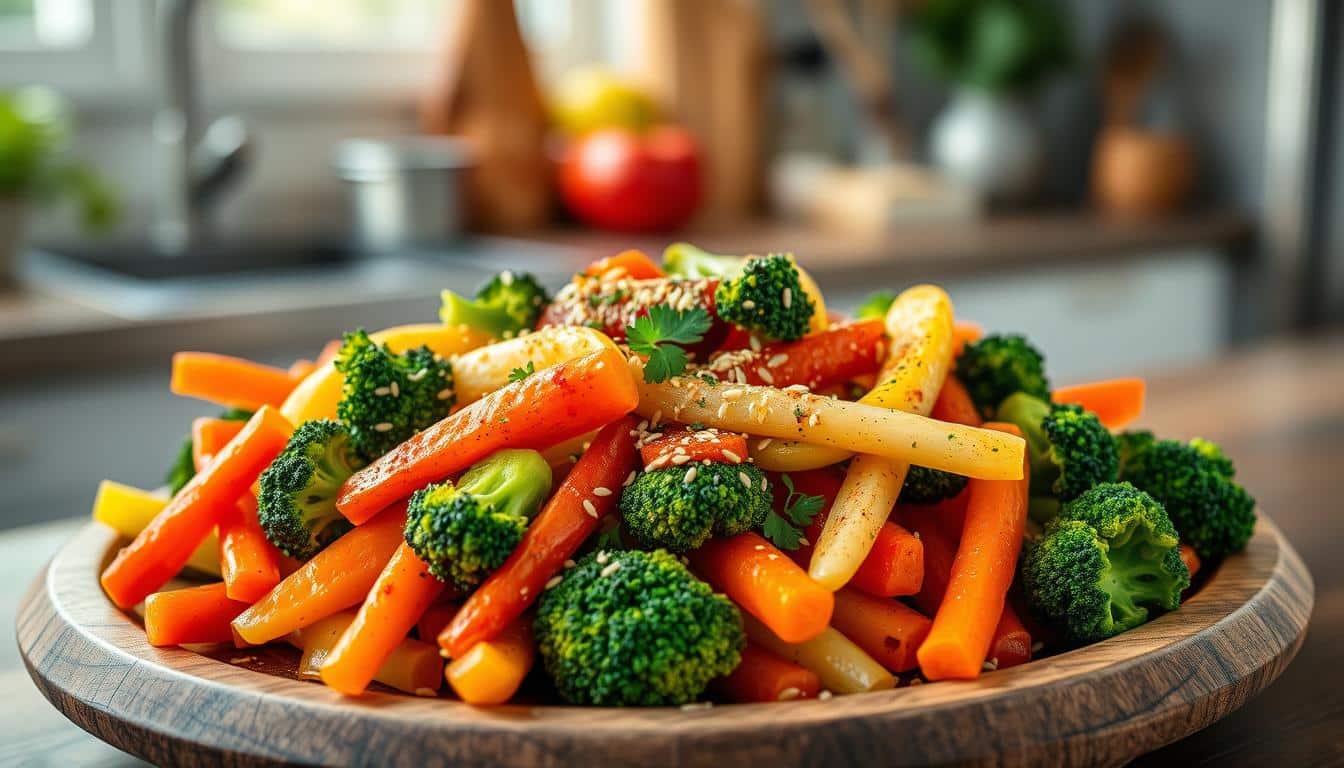
Steaming is a straightforward way to prepare vegetables for a side dish. This guide covers the equipment, a simple recipe, cooking-time ranges, and seasoning ideas. Start with fresh vegetables and adjust the cooking time to their size and texture. For more ideas, see our vegetarian side dishes.
For tender vegetables with some bite, keep an eye on the water level and check for doneness early. The recipe below offers a starting point; seasoning ideas follow.
A good steamed-vegetable side dish depends on the size of the pieces, cooking time, and seasoning. You can prepare one with basic equipment and adjust the vegetables to what you have.
Key Takeaways
- Steaming is a great way to preserve the nutrients and flavor of your veggies
- A simple best steamed veggies recipe can be easy to follow and requires minimal effort
- Steamed vegetable recipes are a great way to add some variety to your meals
- Creative seasoning ideas can elevate your steamed veggies to the next level
- With a few simple ingredients and basic equipment, you can create a delicious and healthy side dish
- Best steamed vegetables can be made with a variety of vegetables and seasonings
- Vegetable recipes can be easy to make and fun to experiment with
Table of Contents
Essential Equipment for Perfect Steamed Vegetables
To start steaming, you need some basic gear. A good steamer basket is key for perfect steamed veggies. It ensures even cooking and makes removing veggies easy. Steamed veggies are a healthy and tasty side dish, great for many flavors.
For green beans, bring water to a simmer in a large pot. Set a steamer basket above the water, add the beans, and cover. Begin checking after 4 minutes; they may take about 4–6 minutes, depending on thickness and how tender you like them.
If you don’t have a steamer basket, no worries. You can use a metal colander or a silicone steamer. Just adjust cooking time and method based on your tool.
Choosing the Right Steamer Basket
When picking a steamer basket, think about size and material. Choose one big enough for your veggies but not too big. Opt for a durable, easy-to-clean material like stainless steel or silicone. Unlock the Power of Steaming: A Comprehensive Guide to Using a Good Cook Steamer Basket.
Alternative Steaming Tools
There are other tools for steaming veggies too. Some include:
- Metal colander
- Silicone steamer
- Steamer pot with a built-in basket
Setting Up Your Steaming Station
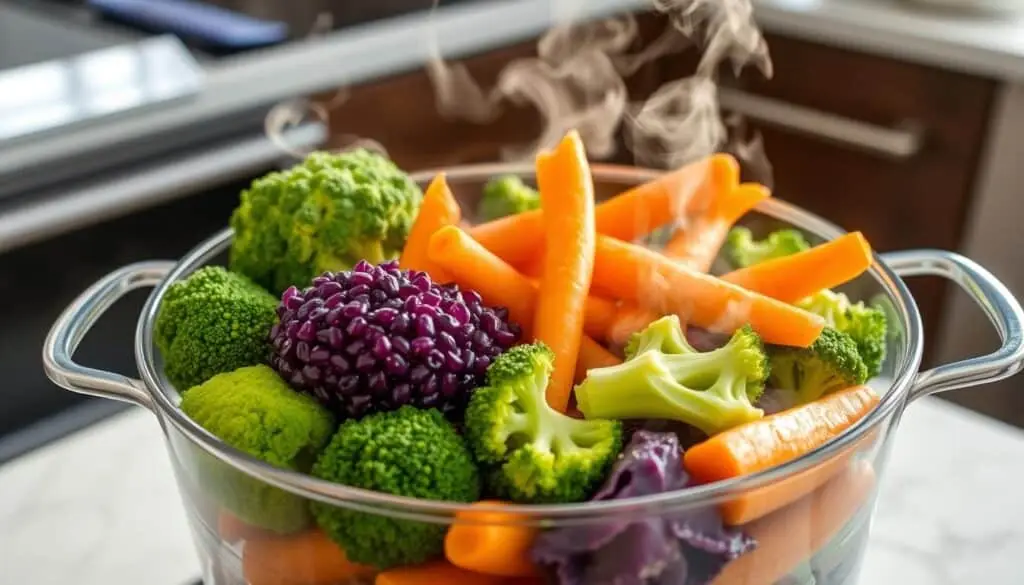
To set up, you need a large pot, a lid, a heat source, and water. Use about an inch of water. Boil the water, then lower the heat and add your steamer basket or tool. Add your veggies and cover. You’re ready to steam!
| Equipment | Description |
|---|---|
| Steamer Basket | A must-have for perfect steamed vegetables |
| Metal Colander | An alternative steaming tool |
| Silicone Steamer | An easy-to-use and clean steaming tool |
The Best Steamed Veggies Recipe for Beginners
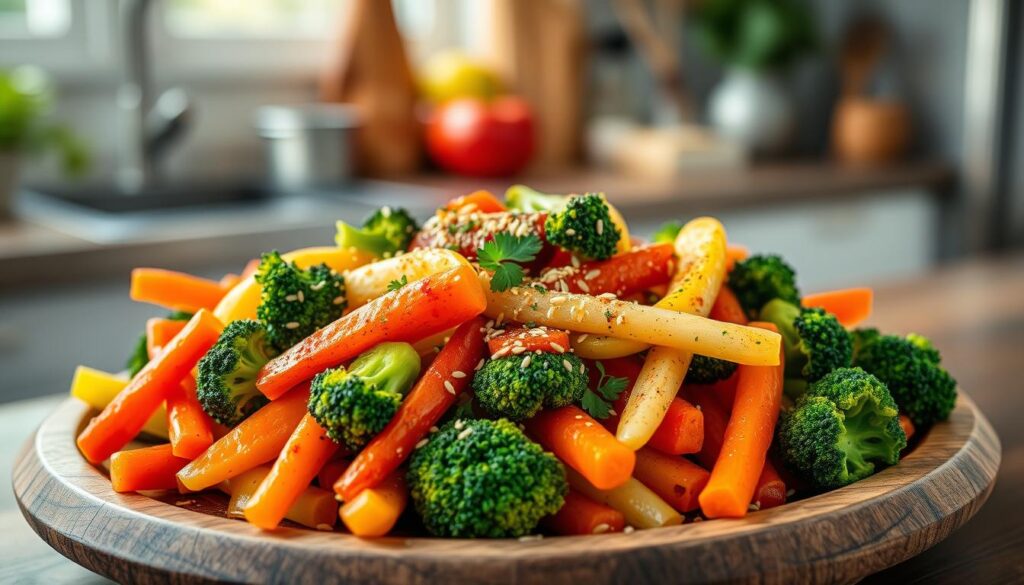
With the equipment ready, try this simple steamed-vegetable recipe. It uses a soy-and-sesame seasoning; use the vegetables you prefer and check each for doneness.
For this version, use green beans, carrots, and broccoli, or substitute vegetables of similar size. Soy sauce and sesame seeds add savory flavor. Check labels if you need a gluten-free soy sauce.
Here are some tips to keep in mind when steaming your veggies:
- Use fresh and colorful veggies for the best flavor and texture.
- Don’t overcrowd the steamer basket, as this can affect the cooking time and quality.
- Experiment with different steam vegetables ideas and seasonings to find your favorite combinations.
With these tips and a simple recipe, you’ll be enjoying delicious steamed asian veggies in no time. So, go ahead and get creative with your chinese steamed veggies and happy cooking!
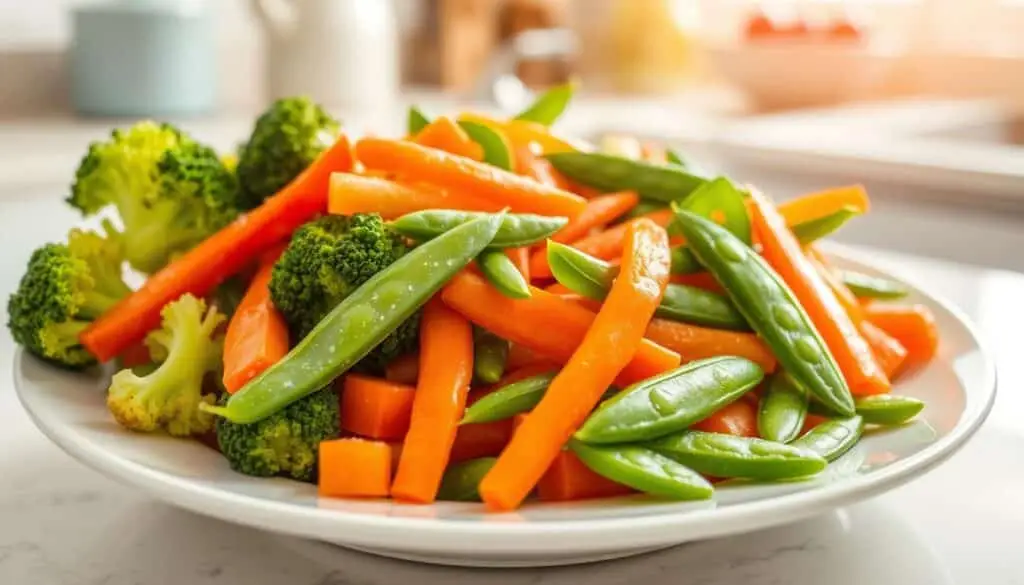
Master the Art of Vegetable Steaming Times
Steaming times vary with the vegetable and how large the pieces are. Use the time ranges below as a starting point and test a piece before serving.
Quick-Cooking Vegetables
Some veggies steam fast, in 5 minutes or less. Spinach, green beans, and broccoli are examples. Keep an eye on them to prevent overcooking.
Medium-Cook Vegetables
Carrots and Brussels sprouts steam for 6-10 minutes. For mixed veggies, just add them to the basket. Cook until they’re tender but crisp.
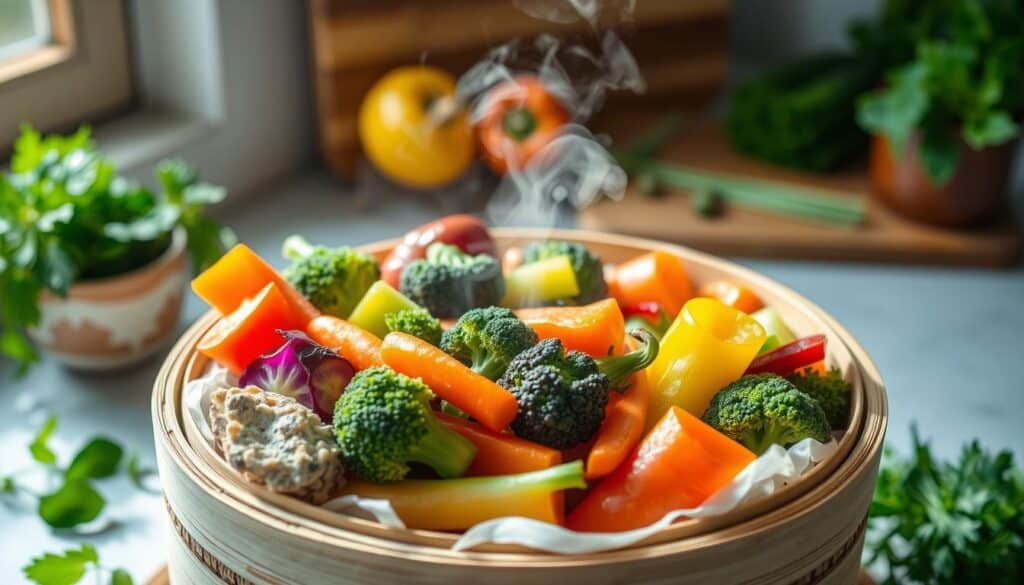
Longer-Cook Vegetables
Beets and sweet potatoes need 11-15 minutes to steam. Adjust the time based on the vegetable. Feel free to mix veggies to find your favorite.
Chinese Steamed Vegetables Techniques
Steamed vegetables can be finished with a simple soy-and-sesame sauce. This is one seasoning option, not a claim to represent every Chinese or other Asian cooking tradition.
Good steamed vegetable recipes often use soy sauce, ginger, and garlic. These add bold, aromatic flavors. Try different vegetables like bok choy, broccoli, and carrots to find your favorites. These techniques are great for both seasoned cooks and beginners, making delicious, healthy meals for any time.
Traditional Asian Seasonings
- Soy sauce: adds a salty, umami flavor to your dishes
- Ginger: adds a spicy, warming flavor to your dishes
- Garlic: adds a pungent, aromatic flavor to your dishes
Using these traditional Asian seasonings will make your Chinese steamed vegetables authentic. They’ll impress your friends and family. So, try different seasonings and ingredients to find your favorite steamed vegetable recipes.
Creative Seasoning Ideas for Steamed Vegetables
Once the vegetables are steamed, try a little olive oil and lemon juice, or season lightly with salt and pepper. Taste before adding more seasoning.
For something different, try soy sauce and sesame seeds together. This mix is great for a seasoned steamed dish. Here are some ideas to start with:
- Drizzle with olive oil and lemon juice for a light and refreshing flavor
- Sprinkle with salt and pepper for a classic seasoning
- Mix with soy sauce and sesame seeds for an Asian-inspired flavor
- Try a combination of your favorite herbs and spices to create a unique flavor profile
The secret to a tasty seasoned steamed veggie dish is to experiment. Find the flavor mixes you love. Don’t be shy to try new things and enjoy the journey!
Troubleshooting Common Steaming Mistakes
Common problems include unevenly cut pieces and overcooking. Cut vegetables to similar sizes, keep the basket above the water, and check for doneness early.
Use the tips below to troubleshoot common steaming problems:
- Overcooking: This is a common problem, mainly for beginners. To avoid overcooked veggies, check them often and adjust the steaming time.
- Steam levels: It’s key to manage steam levels for perfectly cooked veggies. Use a steamer basket with a steam control or adjust the heat to control steam.
- Temperature control: This is also vital for steaming. Use a thermometer to check the temperature and adjust it to prevent undercooked or overcooked veggies.
By following these tips and practicing, you’ll make delicious and tender veggies. And if you have questions or need help, just reach out. Happy steaming!
Conclusion: Elevate Your Vegetable Game with Perfect Steaming
Steaming vegetables is a useful technique for a quick side dish. Start with the recipe and timing guidance above, then adjust the seasoning to taste.
Steaming is a great way to cook because it keeps food healthy and brings out its natural flavors. By knowing the right cooking times and trying different vegetable recipes, you can make many tasty meals.
So, what are you waiting for? Start steaming your veggies and improve your cooking skills. Your taste buds and body will love it!
FAQ
What is the best way to steam vegetables?
The top method for steaming veggies is to use a steamer basket. You can also try a metal colander or silicone steamer. Just remember to have a big pot with a lid and about an inch of water for the steam.
How long should I steam different types of vegetables?
Cooking times for steamed veggies vary. Quick ones like green beans and broccoli steam in 5 minutes or less. Medium-cook veggies like carrots and cauliflower take 6-10 minutes. Longer-cook veggies like potatoes and beets need 11-15 minutes.
What are some good seasoning ideas for steamed vegetables?
There are many ways to season steamed veggies. Try olive oil and lemon juice, soy sauce and sesame seeds, or just salt and pepper. For something more complex, use ginger, garlic, and chili flakes for an Asian twist.
How can I prevent my steamed vegetables from becoming overcooked?
To avoid overcooked veggies, keep a close eye on the cooking time. Adjust it for the type of veggie you’re steaming. Also, manage the steam levels and temperature to keep your veggies tender and tasty.
Where can I find more information on steaming vegetables?
For more help, see the troubleshooting tips above and the FAQ below. Check cooking time early and adjust it for the size of your vegetables.
1 thought on “Whip Up the Best Steamed Veggies Recipe in No Time”